Learn the common causes of loose or slipped roof tiles, including storm damage, ageing mortar, and when repairs or replacement are needed.
You probably noticed it from the kitchen window. One tile sitting at a weird angle, or worse, lying on the lawn after Tuesday night's wind. Not a great start to the morning. And the question that goes through everyone's head is more or less the same: how on earth did that happen, and how worried should I be about it?
Short version - slipped tiles happen a lot more than people realise, and the cause isn't always something dramatic. Could be one bad storm. Could be twenty years of slow wear finally catching up. Either way, here's a proper look at what's going on up there, what to watch for, and what your options actually are.
How to Tell if a Roof Tile Has Slipped
Annoying thing about slipped tiles is they often go unnoticed for ages. Weeks, sometimes longer. Usually you only find out when something else gives the game away - damp coming through a ceiling, a tile in the flowerbed, that sort of thing. From the ground a displaced tile can look fine, especially on a steep roof or one with a few trees in the way.
The Signs You Shouldn't Ignore
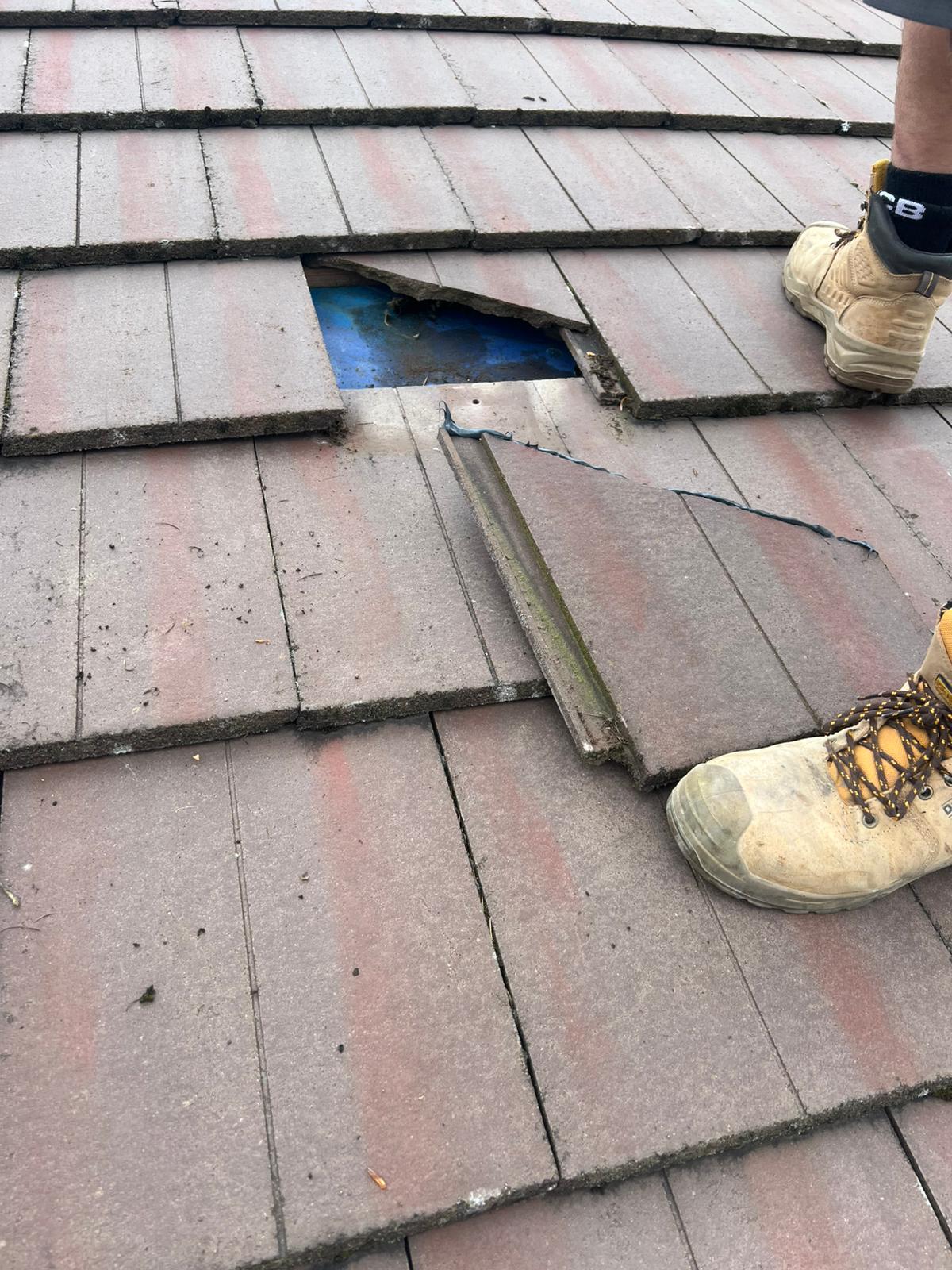
Best thing to do is step back across the road or into the garden on a bright day and just have a proper look. You're after tiles that don't sit flush, gaps where things should line up neatly, or bits of underlay showing through where you really shouldn't see any.
Other clues are sneakier. A damp patch on an upstairs ceiling. Water marks creeping around the chimney. Bits of broken tile turning up in the gutter or down on the patio. A draught in the loft that wasn't there last winter. If there's a pair of binoculars knocking about somewhere, grab them - surprisingly handy, and a lot safer than dragging the ladder out.
The Most Common Causes of Slipped Roof Tiles
So, why does it happen. Most slipped tiles come down to one of four things, and usually it's a bit of a combination rather than one clean cause.
Weather Damage and Storms
The British weather has a lot to answer for here. Storms, high winds, the sideways rain we get in the south west - all of it can shift tiles, especially on older roofs or houses sitting in a windy spot. Modern tiles tend to be nailed or clipped, but plenty of older roofs still rely on gravity and the weight of the tile itself, which works fine until a 60mph gust comes through and proves otherwise.
It's not just storms either. The freeze-thaw cycle does its bit quietly all winter long. Water gets into a tiny crack in the mortar, freezes overnight, expands, opens the crack a bit wider. Do that across a few winters and the bond just gives up. Which is why so many slipped tiles only show up after the first proper storm of the season - damage was already there, the wind just finished it.
Worn or Cracked Roof Tile Mortar
A lot of what's keeping your roof together is mortar, particularly around the ridges and verges. Roof tile bedding mortar - the stuff that holds the ridge tiles in place - dries out and starts cracking after enough years. Once that goes, ridge tiles are the prime candidates to slip. And because they sit right at the top of the roof, when one comes down it's usually got mates on the way.
You can sometimes spot cracked mortar on the tile roof ridge from down on the ground if you know what you're after - hairline cracks along the ridge line, missing chunks, gaps between the ridge tiles and the row beneath them. The fix is normally repointing, where the old mortar gets taken out and replaced with a fresh roof tile mortar mix. Not a massive job on its own. But it's one of those things that costs a lot more if you let it run, because once the ridge starts moving the rest of the roof's not far behind.
General Wear and Age
Roofs don't last forever, even well-kept ones. A concrete tile roof gives you somewhere around 50 to 60 years. Clay or slate can go longer. Every component has a shelf life though. Nail fatigue is a big one - the galvanised nails holding everything in place slowly corrode over decades, and once they're gone the tiles start working loose all by themselves. Some roofers call it "nail sickness", and it's one of the main reasons older roofs end up with several slipped tiles in fairly quick succession.
If your roof's the wrong side of 40 and you're seeing the odd slip here and there, get the whole thing checked out properly rather than just patching the obvious. What looks like a one-off is often the first symptom of something bigger.
Poor Original Installation
Not every slipped tile is the weather's fault though. Sometimes you can trace it straight back to how the roof was put on in the first place - tiles not nailed or clipped properly, ridge tiles bedded onto thin or rushed mortar, sections where the underlay was a bit slapdash. Stuff like that can sit there for years without showing, especially on a sheltered roof, then go off the moment a hard winter rolls in.
Tends to be more common on extensions, garage roofs and DIY conversions, but it's not unheard of on bigger jobs either. If your roof's reasonably new and tiles are already going, that's a fairly strong hint the original work was a bit ropey. Worth getting a roofer to have a look before it gets worse.
What to Do When You've Got a Slipped Tile
A slipped tile isn't an emergency. But you can't really leave it indefinitely either. Even one tile out of place opens up a way for water to get in, and once it does, things tend to go downhill fairly quickly - battens, underlay, insulation, ceiling below. Snowballs.
When a Roof Tile Replacement Makes More Sense
If you're seeing slipped tiles every couple of months, or the roof's well past 40 and the tiles look weathered all over, repairs start feeling like you're just papering over the cracks. That's usually the point where a partial or full roof tile replacement makes more sense than chasing the next leak.
Roof tile replacement cost in the UK varies a fair bit depending on size and tile type, but for your average semi you're typically looking at £5,000 to £9,000 for a full reroof in concrete. Slate or clay sits higher. Bigger spend up front, no question. But it resets the clock - a properly installed new roof should give you another 50 years with hardly any bother, which usually works out cheaper than calling a roofer out every other winter.
Final Thoughts
Loose or slipped tiles aren't usually the start of something terrible. But they're almost always your roof telling you something needs sorting. Whether it's age, mortar that's done its time, a dodgy bit of original work, or one bad storm too many, the cause matters because it changes what the right fix looks like.
Best thing you can do is keep half an eye on the roof from the ground a few times a year, especially after the wind picks up, and ring a local roofer the second something looks off. A look from someone who knows what they're doing usually doesn't cost a thing - and it's the difference between a £150 repair now and a £1,500 one come spring. If you're in Bath or anywhere round the south west and you've spotted a tile out of place, get in touch for a no-pressure look and a clear quote.
Get Slipped Roof Tiles Checked in Bath
Noticed a tile out of place after strong wind? Found broken pieces in the gutter or damp appearing indoors?
We inspect and repair slipped roof tiles across Bath and the surrounding areas. Get in touch for a free quote and honest advice before small roofing issues become larger repairs.
Services
Read More Of Our Blogs
From seasonal maintenance advice to expert roofing tips, our blog helps Bath homeowners stay informed and protected.